

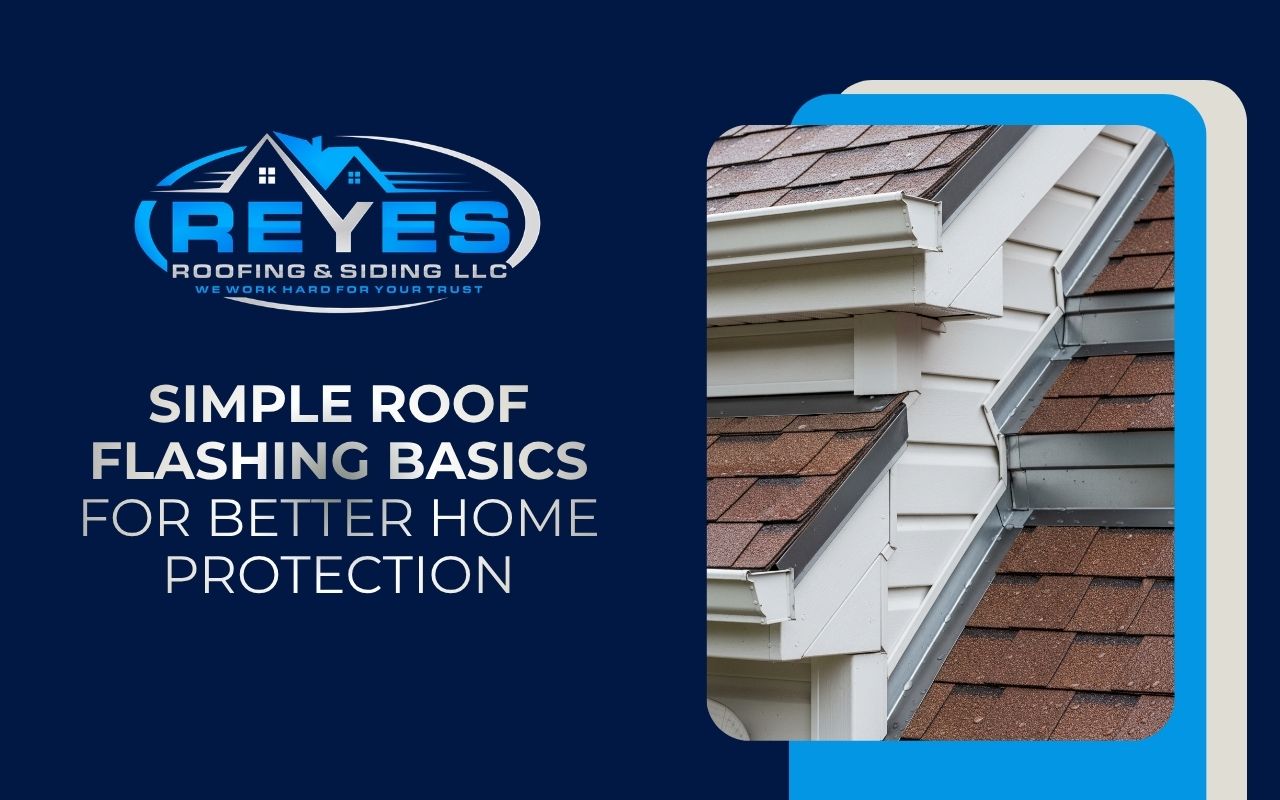
Simple Roof Flashing Basics For Better Home Protection
Roof flashing basics help homeowners see how a roof keeps rain away from weak spots. Thin pieces of metal or flexible material guide water away from edges, walls, vents, and chimneys so the home stays dry.
At Reyes Roofing And Siding LLC, we believe simple roof knowledge makes home care easier. Therefore, this guide explains flashing, drip edge roofing, roof edge protection, and flashing around chimneys in clear words.
Flashing Creates A Safer Roof During Heavy Rain
Roof flashing basics are important because water always looks for small openings. Flashing closes those openings near joints, roof edges, and roof changes. As a result, rain moves away instead of sliding under shingles.
Good flashing also helps prevent rot, stains, mold, and soft wood. In addition, it supports the full roof system during storms. For broader roof support, homeowners can review our roofing and exterior services.
Common Materials Used For Long Lasting Roof Flashing
Different flashing materials fit different homes. Galvanized steel is strong and common. Aluminum is light and resists rust. Copper can last for many years and gives a clean look. Rubber-style flashing can also seal tight spaces well.
Galvanized steel works well for many standard roof areas.
Aluminum is useful in wet areas because it resists rust.
Copper is durable and often used for a higher-end finish.
Flexible flashing helps around skylights, vents, and uneven shapes.
Roof Edges Need Careful Water Control
Roof flashing basics also include the edges of the roof. Drip edge roofing helps water move into the gutters instead of behind the fascia. This small piece can prevent damage that often starts slowly.
Strong roof edge protection is especially helpful during heavy rain and wind. It helps keep shingles firm at the edge and lowers the risk of hidden leaks. Therefore, edge flashing should never be skipped.
Areas Where Flashing Protects The Home Most
Flashing is needed where roof parts meet or change direction. Valleys, walls, vents, skylights, and chimneys all need sealed edges. Without this protection, water can collect and enter small gaps.
Valleys guide large amounts of rain down the roof.
Step flashing protects areas where roofing meets siding.
Vent flashing seals pipes that pass through the roof.
Flashing around chimneys protects the joint between masonry and shingles.
Warning Signs Your Flashing Needs Fast Attention
Damaged flashing can show itself in simple ways. Look for rust, loose edges, cracked sealant, lifted shingles, or stains on ceilings. In many cases, these signs appear before a large leak forms.
Our team checks these problem areas with care because early repairs often protect the whole roof. For nearby help, visit our Covington roof repair page.
Simple Inspection Steps For Safer Home Maintenance
Roof flashing basics can help homeowners know what to watch for from the ground. However, roof climbing can be risky. For safety, use binoculars first and only use a ladder when conditions are dry and stable.
Check roof edges for bent or missing drip edge roofing.
Look near chimneys for cracks, gaps, or loose metal.
Watch ceilings and attic spaces for stains after storms.
Call a roofer when flashing looks lifted, rusty, or broken.
Frequently Asked Questions
What is roof flashing?
Roof flashing is a thin barrier that directs water away from weak roof areas. It is often placed around edges, walls, vents, valleys, and chimneys.
Why does flashing around chimneys matter?
Flashing around chimneys matters because the chimney and roof meet at a vulnerable seam. Proper flashing helps stop rain from entering that joint.
How does drip edge roofing help?
Drip edge roofing moves water away from the roof edge and into the gutter. As a result, it helps protect fascia boards and lower roof edges.
Can damaged flashing cause indoor stains?
Yes, damaged flashing can allow water to enter under shingles. Over time, that water may create ceiling stains, soft drywall, or wet insulation.
When should a professional inspect flashing?
A professional should inspect flashing after strong storms, visible damage, or signs of leaks. Older roofs should also be checked during regular maintenance.
Professional Care Helps Prevent Costly Roof Leaks
Roof flashing basics are easier to manage when small problems are handled early. Our team can reseal weak seams, replace worn pieces, and check roof edge protection before leaks spread.
At Reyes Roofing And Siding LLC, we help protect your home with careful roof service. For support in another nearby area, stop by our Maple Valley roof repair page, or get in touch through our contact page.