

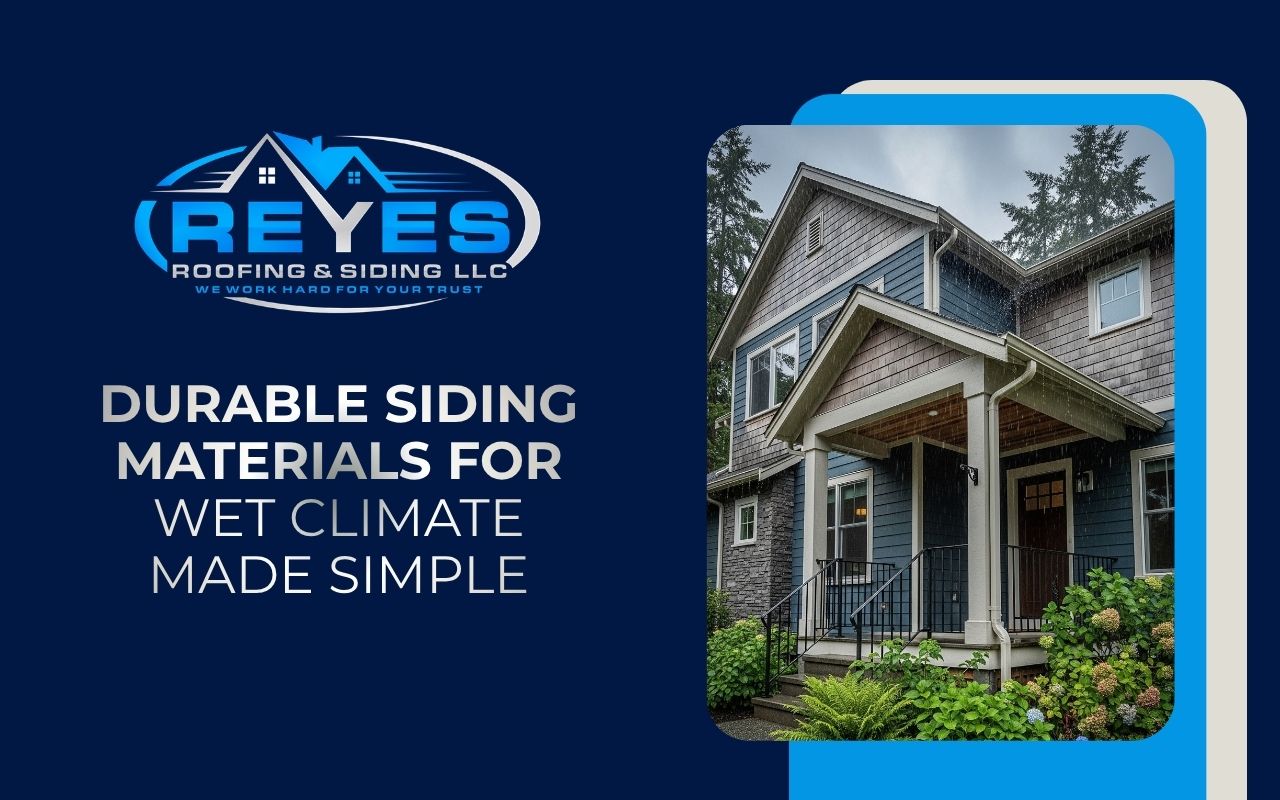
Durable Siding Materials For Wet Climate Made Simple
Choosing siding materials for wet climate can feel hard when rain, humidity, and wind keep testing your home. However, the right choice can help protect your walls, lower stress, and keep your exterior looking clean for years.
At Reyes Roofing And Siding LLC, we help homeowners compare strong options like fiber cement siding and vinyl siding. As a result, you can choose a surface that fits your home, your upkeep needs, and your local weather.
How Wet Weather Can Wear Down Home Siding
Wet weather can push water into small gaps around panels, corners, windows, and doors. Over time, trapped moisture may lead to mold, soft spots, stains, and damage inside the wall area.
Because of this, exterior siding durability matters in rainy places. A strong siding system should shed water, dry well, and stay steady through many wet and dry days.
Fiber Cement Protection For Rainy Northwest Family Homes
Fiber cement siding is made to handle damp conditions better than many wood-based choices. It resists swelling, rot, and insect damage, which makes it a strong option for long rainy seasons.
Also, it keeps its shape well when installed with proper flashing and sealed joints. For homeowners comparing siding materials for wet climate, this material offers lasting value and steady protection.
It resists moisture better than many natural siding choices.
Holds paint well when cared for correctly.
Can support strong exterior siding durability over time.
Vinyl Siding Benefits In Damp And Rainy Areas
Vinyl siding moisture resistance makes this option useful for homes exposed to frequent rain. Since vinyl does not absorb water like wood, it can help reduce common surface problems.
In addition, vinyl is light, easy to clean, and available in many styles. Homeowners can review our exterior home services to see how siding work can support a stronger home.
Key Material Limits Homeowners Should Know Before Installation
Every siding option has limits. Fiber cement siding is heavy, so it needs careful handling and skilled installation. If seams are not sealed well, water may still reach hidden areas.
Vinyl can also shift, buckle, or loosen when it is not installed with enough room to move. Therefore, siding materials for wet climate must be matched with proper airflow, trim, and drainage.
Fiber cement needs strong support and clean sealing work.
Vinyl needs proper fastening and space for movement.
Both choices need good flashing around openings.
Maintenance Habits That Help Siding Last Longer Outside
Simple care helps siding last longer in damp weather. Homeowners should rinse dirt, clear leaves near walls, and check for gaps around windows, doors, and corners.
At Reyes Roofing And Siding LLC, we recommend routine checks after heavy storms. Also, our Kent siding installation team can help with siding planning when moisture is a major concern.
Smart Details That Support Better Moisture Control Outdoors
Good siding is not only about panels. Trim, flashing, caulking, gutters, and roof edges all help guide water away from the walls before it causes trouble.
For better vinyl siding moisture resistance, panels need space to drain and dry. Meanwhile, fiber cement siding needs sealed edges and neat joints to protect the wall system.
Keep gutters clean so water does not spill onto siding.
Trim plants back to help walls dry faster.
Inspect caulk and flashing before rainy seasons begin.
Choosing Local Installation For Long Lasting Results
Local experience matters when selecting siding materials for wet climate. Homes in rainy communities need details that match wind, drainage, shade, and daily moisture levels.
We work with homeowners who want practical siding guidance. For nearby support, you can view our Covington siding services or our Maple Valley siding options.
Frequently Asked Questions
What siding works best in wet weather?
Fiber cement siding and vinyl are both common choices. The best option depends on your budget, home style, upkeep plans, and how much rain your walls face.
Does vinyl siding stop all moisture problems?
No siding stops every moisture problem by itself. Vinyl siding moisture resistance helps on the surface, but proper installation, airflow, and flashing are still important.
Is fiber cement siding hard to maintain?
Fiber cement is not hard to maintain, but it does need checks. You should watch for cracked paint, worn caulk, and open seams after strong weather.
How often should siding be inspected?
A yearly inspection is a smart habit. However, after heavy rain or wind, an extra check can help catch small issues before they spread.
Can siding improve home protection?
Yes, quality siding can improve home protection when it is installed correctly. It helps guide water away and supports better exterior siding durability.
Plan A Stronger Exterior With Trusted Guidance
Choosing siding materials for wet climate is easier when you compare lifespan, care needs, moisture control, and installation quality. The right system should protect your home while keeping upkeep simple.
At Reyes Roofing And Siding LLC, we assist you to make a clear choice. To discuss your siding goals, visit our contact pageand tell us what your home needs.